
The Homeowner’s Guide to Upholstery Care: Decoding Fabric Labels
Protecting Your Investment: Why Upholstery Care is Different
Unlike a hard floor or a countertop, your sofa is a complex multi-layered system of fabric, padding, and internal structure. Because fabrics are porous, they absorb oils, odors, and dust deep into their fibers. Many homeowners are hesitant to clean their furniture for fear of ruining the material, but with a basic understanding of “cleaning codes,” you can safely maintain your upholstery and extend its life by years. The key is to stop treating your couch like a rug and start treating it like a specialized textile.
Decoding the “Secret” Cleaning Codes
Before you apply any liquid to your furniture, you must find the care tag, usually located under the seat cushions. Look for these universal industry codes:
- W (Water-Based): This is the most forgiving fabric. You can use water-based cleaning agents like a mild dish soap solution or specialized upholstery shampoo.
- S (Solvent-Based): These fabrics are “dry clean only.” Water will leave permanent rings or cause the fabric to shrink. You must use a water-free solvent (dry cleaning fluid) in a well-ventilated room.
- W/S (Water or Solvent): You have the flexibility to use either method. These are typically durable synthetic blends.
- X (Vacuum Only): This is the rarest and most delicate code. No liquids or solvents should ever touch this fabric; it must be maintained strictly through professional cleaning or careful vacuuming.
The Three-Step Deep Clean Process
If your fabric is marked “W,” follow this professional-style sequence to refresh your furniture:
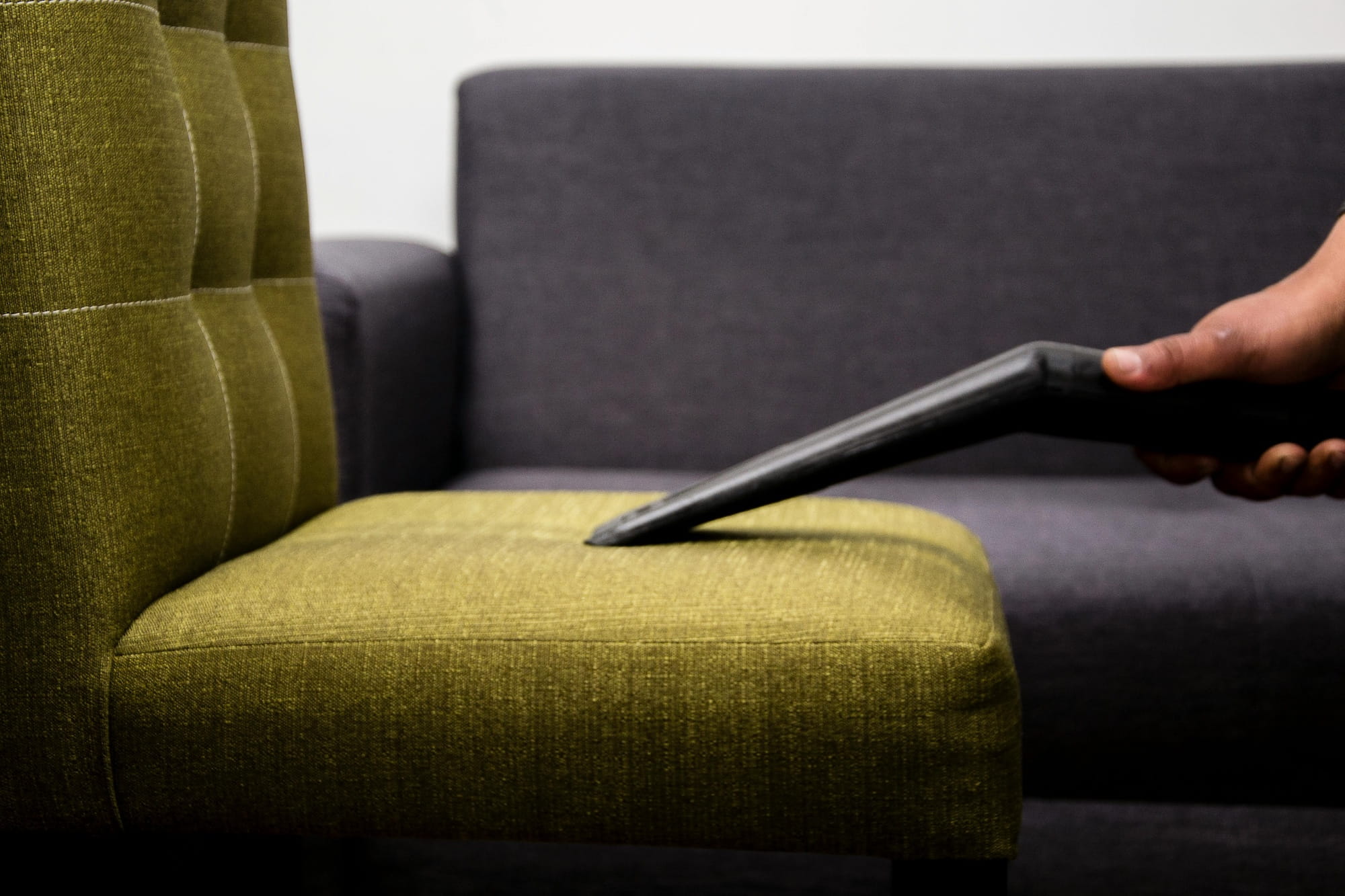
- The Power Vacuum: Use the upholstery attachment to vacuum every inch of the piece. Dust and grit act as tiny saws that shred fabric fibers over time. Removing this “dry soil” is the most important step.
- The Blotting Technique: Never rub a stain. Rubbing pushes the dirt deeper into the padding. Apply your cleaner to a cloth (not the couch) and blot from the outside of the stain toward the center.
- The Fast Dry: Moisture is the enemy of foam. After cleaning, use a dry towel to absorb as much moisture as possible and point a fan toward the area to ensure it dries quickly, preventing mold or “musty” odors.
Dealing with “Cushion Collapse” and Odors
Upholstery care isn’t just about stains; it’s about structural maintenance. Rotate and flip your cushions every few months to ensure even wear. If your sofa has developed a lingering scent from pets or daily use, avoid heavy floral “deodorizer” sprays which can leave a sticky residue. Instead, lightly mist the fabric with a mixture of cheap vodka and water; the alcohol kills odor-causing bacteria and evaporates completely, leaving no trace behind.
When to Call a Professional
If you are dealing with a “Code S” fabric, an heirloom antique, or a stain that has been set for years, it is often safer to call a professional. They use “low-moisture” extraction machines that provide a level of cleaning and sanitation that home kits simply cannot match. For your daily-use furniture, however, regular vacuuming and prompt spot treatment are usually all you need to keep your home looking and smelling fresh.